In the fast-evolving landscape of data communication, the demand for efficient and high-speed transmission solutions has surged. The 100G optical transceiver market is projected to reach a value of $4.7 billion by 2025, according to industry reports. This staggering growth highlights the essential role of 100G optical transceivers in high-capacity networks.
As businesses transition to cloud services and increase bandwidth requirements, understanding the nuances of 100G optical transceivers becomes crucial. These devices must maintain reliability, achieve low latency, and support long-distance communication. However, buyers face challenges in navigating a myriad of options in the market.
While many manufacturers claim superior performance, not all products meet the expected standards. Evaluating specifications, compatibility, and support is vital. A thorough approach can lead to better purchasing decisions. Hence, selecting the right 100G optical transceiver demands careful consideration of factors beyond just price and brand reputation.
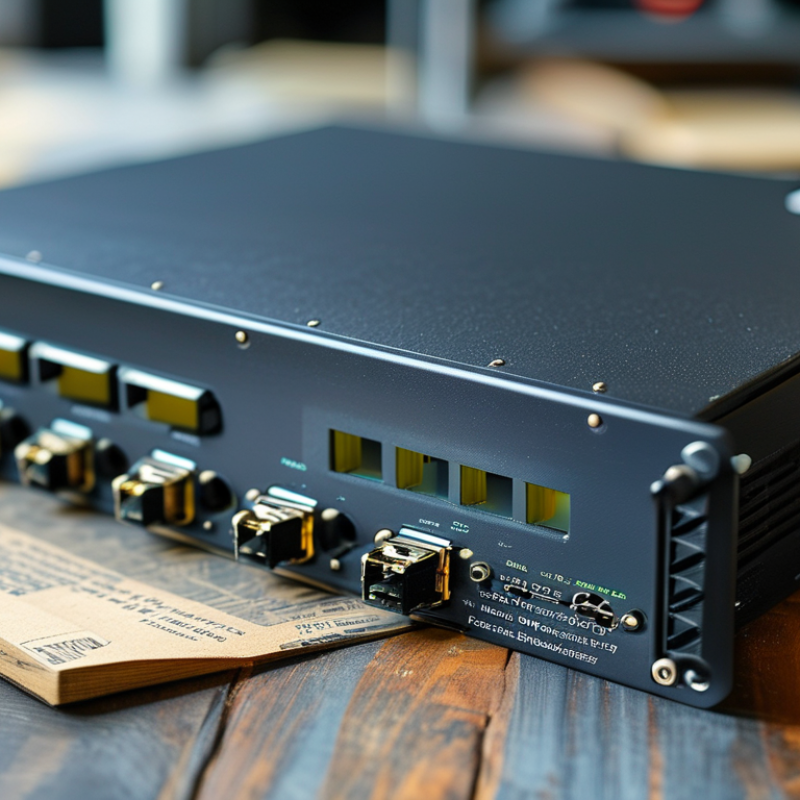
Understanding the Basics of 100G Optical Transceivers
In the ever-evolving landscape of high-speed connectivity, understanding
100G optical transceivers becomes crucial for global buyers. These devices are essential for data centers, telecom networks,
and enterprises needing fast and reliable data transmission. According to a report by Mordor Intelligence, the global
100G optical transceiver market is expected to grow at a CAGR of over 15% from 2021 to 2026, reflecting
rising demand for bandwidth.
100G optical transceivers differentiate themselves through performance specifications, including distance, compatibility, and
form factor. For instance, transceivers like CFP2 and QSFP28 have become popular due to their compact size and efficient
power consumption. However, buyers may face challenges in standardization. Variability in products can lead to integration
issues. Industry analysis by Market Research Future indicates that these integration challenges can stall deployment efforts,
reflecting the importance of thorough compatibility assessments.
To navigate this complex landscape, buyers must leverage accurate data and expert insights. Equipped with reliable performance
metrics, decision-makers can make smarter procurement choices. However, they should also remain cautious, as the rapid pace
of development means potential obsolescence. Understanding these dynamics is vital for sustained competitive advantage in a
fast-paced digital world.
Key Factors to Consider When Choosing a 100G Optical Transceiver
When selecting a 100G optical transceiver, buyers should consider several key factors. First, compatibility is critical. Ensure the transceiver fits your networking equipment. According to a recent report, 45% of network failures stem from incompatible hardware. Verifying compatibility prevents costly downtimes and inefficiencies.
Another significant factor is operational distance. Different transceivers offer varying transmission range. For instance, multimode transceivers typically work well over short distances, while single-mode options are better for long-range applications. Understanding the specific needs of your network is essential. Industry data shows that systems with the wrong range can experience performance drops of up to 30%.
Additionally, monitoring features should not be overlooked. Transceivers with built-in diagnostic capabilities provide real-time insights. This can aid in troubleshooting and maintenance. A report from a leading technology firm indicates that 60% of organizations benefit from smart monitoring tools. Always consider the longevity and reliability of the product. Transceivers should meet the latest standards. This guarantees their performance lasts, mitigating potential issues down the road.
2026 Top 100G Optical Transceiver Performance Comparison
This chart compares the performance of five different 100G optical transceivers based on data rate and power consumption. Buyers should consider these metrics when selecting a transceiver for their applications.
Top Brands and Manufacturers of 100G Optical Transceivers in 2026
In 2026, the market for 100G optical transceivers is expected to expand significantly. Many top brands and manufacturers are emerging, contributing to this growth. These companies possess deep expertise in fiber optics and networking technologies. Their products—ranging from QSFP28 to CFP4 transceivers—offer high-speed solutions for data centers and telecommunications.
A few notable players are recognized for their engineering excellence. They focus on research and development to enhance performance. The levels of reliability and interoperability with existing systems are paramount. Buyers should consider factors like compatibility, data rate, and power consumption. Variability in quality exists among manufacturers, which means buyers must tread carefully.
However, with the increasing options, it can become overwhelming. Not all manufacturers deliver the same standards. It's essential to read reviews and seek recommendations. Some buyers overlook nuances in specifications that could impact performance. Thus, a thorough evaluation of top brands is crucial to make informed choices.
Comparative Analysis of Optical Transceiver Technologies and Standards
When considering optical transceiver technologies, several standards stand out. These include SFP, SFP+, and QSFP formats. Each has unique specifications and advantages. SFPs typically support data rates up to 1 Gbps. In contrast, SFP+ can handle speeds of 10 Gbps. This difference is crucial for users requiring higher bandwidth in their networks.
The choice of technology can significantly impact performance and compatibility. For example, QSFP transceivers often support multiplexing capabilities, allowing for greater throughput. However, with advanced technologies come higher complexity levels. It's essential for buyers to understand these nuances before selection. Not all devices support every standard; thus, verifying compatibility is critical.
While the market offers numerous options, potential buyers should reflect on their specific needs. Evaluating network speed, distance requirements, and power consumption is vital. Each transceiver type has strengths and weaknesses. A thorough comparative analysis can illuminate the best fit. This decision can seem daunting, but a strategic approach can simplify the process.
Future Trends in 100G Optical Transceivers and Market Projections
The market for 100G optical transceivers is evolving rapidly. As data consumption rises, many industries rely on these devices for high-speed connectivity. According to a recent report by MarketsandMarkets, the global optical transceiver market is projected to reach $9.2 billion by 2026, with the 100G segment driving much of this growth. This increase is fueled by the demand for cloud computing, video streaming, and big data analytics.
Future trends indicate a shift towards higher integration and efficiency. Transceivers are becoming more compact, supporting multiple protocols such as Ethernet and OTN. In 2023, the rise of coherent technology is expected to improve transmission distances and lower costs. A study from ResearchAndMarkets highlights that the demand for compact and cost-effective solutions will redefine the design of optical networks.
However, challenges persist. Not all manufacturers prioritize quality, which can lead to discrepancies in performance. As buyers, understanding these nuances is crucial. Ensuring compliance with industry standards can mitigate risks associated with low-quality components. Hence, continued research and collaboration within the industry are essential for sustained growth and innovation in the 100G transceiver market.
2026 Top 100G Optical Transceiver Buying Guide for Global Buyers
| Specification |
Current Trend |
Projected Growth (2026) |
Market Share (%) |
| Data Rate |
Increase in adoption of 100G |
35% |
40% |
| Form Factor |
SFP28, QSFP28 |
50% |
30% |
| Transmission Distance |
Longer distances for higher bandwidth |
20% |
25% |
| Technology Type |
Coherent & Direct Detect |
25% |
35% |
| Price Range (USD) |
Competitive pricing strategies |
10% decrease |
15% |
FAQS
: They are essential for data centers and telecom networks requiring fast and reliable data transmission.
Incompatible hardware can lead to 45% of network failures, causing costly downtimes.
Different transceivers have varying transmission ranges; multimode works for short distances and single-mode for long.
Built-in diagnostics offer real-time insights, aiding troubleshooting and maintenance.
The market is expected to reach $9.2 billion, primarily driven by the 100G segment.
There's a shift towards higher integration and efficiency with compact designs supporting multiple protocols.
Understanding performance helps avoid potential obsolescence and ensures competitive advantages in the market.
Poor quality can cause discrepancies in performance, impacting network reliability.
Conducting thorough compatibility assessments can prevent deployment stalls and ensure smooth integration.
Systems may experience up to a 30% drop in performance if the range is incorrect.
Conclusion
The "2026 Top 100G Optical Transceiver Buying Guide for Global Buyers" provides a comprehensive overview of the essentials surrounding 100G optical transceivers. It begins by explaining the fundamental concepts of these devices, which are crucial for high-speed data transmission in modern networks. Key factors to consider when selecting a 100G optical transceiver include compatibility with existing infrastructure, performance specifications, and future scalability needs.
Furthermore, the guide outlines current market leaders in the 100G optical transceiver arena while highlighting a comparative analysis of various technologies and standards. It also delves into emerging trends that are expected to shape the future of 100G optical transceivers, alongside market projections that suggest ongoing growth and innovation in this field. This resource equips global buyers with the knowledge necessary to make informed decisions in the evolving landscape of optical communication technology.
 FiberQ
